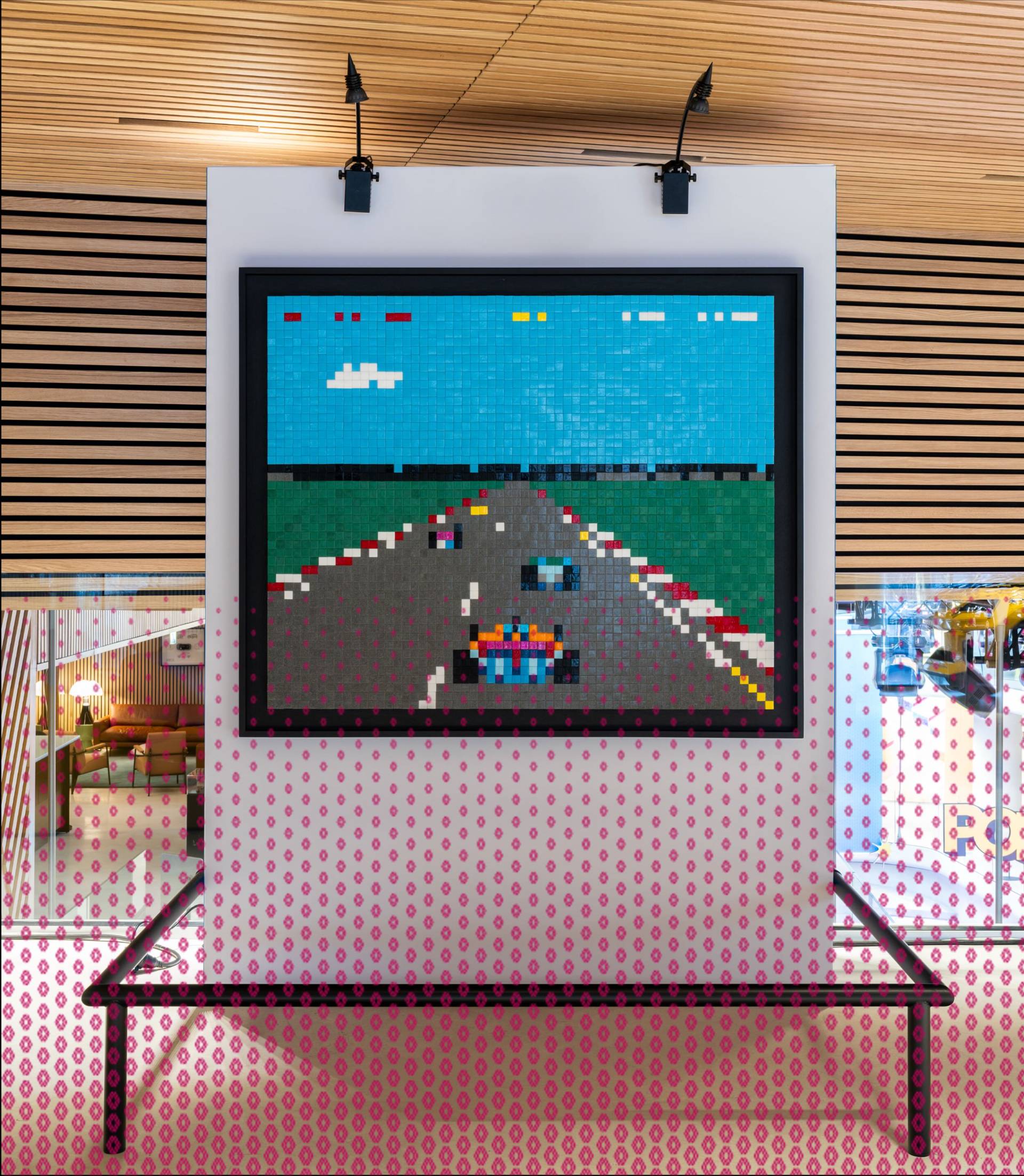
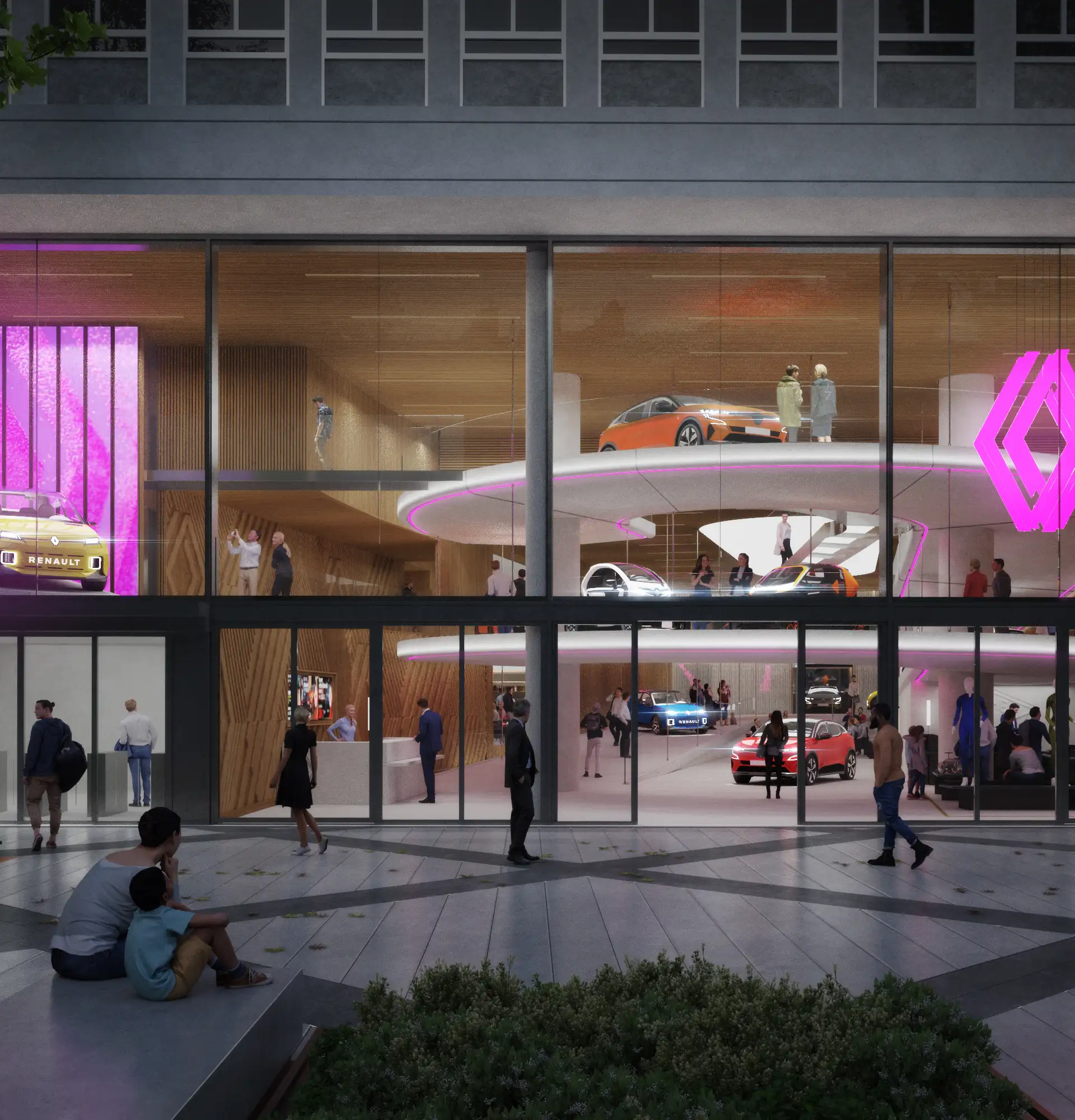
Le défilé renault® runway welcomes Pop Art Car, an exhibition conceived with the Fonds Renault pour l’Art et la Culture, weaving a dialogue between three universes deeply rooted in our daily lives: Pop Art, Street Art, and the automotive object. The car leaves the road to enter the field of perception, interpretation, and symbolism. Like the artworks on display, it becomes a visual surface, a material, and a narrative. With Pop Art Car, the brand celebrates the link between industrial innovation and artistic creation, affirming that the car, an object shared by all, is also an icon of popular culture.
From Mass Culture to Public Space
Pop Art emerged in the 1950s–1960s from a desire to demystify images by drawing its forms and subjects from mass culture, the media, and advertising. Pop artists set themselves apart from previous movements by deciding in advance what they were going to paint. They praised a “depersonalized, anonymous, objective” aesthetic. Their visual languages aligned with the postwar industrial boom, influenced by the arrival of color printing, the development of new techniques such as screen printing and acrylic paint, and the transformation in the way of living through cars, highways, supermarkets, television, and photography.
Street Art extends this heritage by blending it with popular art, comic books, music, murals, and urban cultures linked to street practices (graffiti, breakdance, hip-hop). Emerging in the early 1970s, it took over public space, values ephemerality and spontaneity, and develops visual languages that are readable and immediately accessible to all. From Gérard Zlotykamien to the pioneers of graffiti, and through to contemporary artists such as Invader, Jean Faucheur, or D*Face, Urban Art, by multiplying perspectives, asserts itself as a contextual art in direct dialogue with the city and its inhabitants.
For Pop Art historian Renaud Faroux, these practices form a true continuum: an art that seizes reality, engages with the images around us, and transforms everyday objects, including the car, into cultural icons. The exhibition reveals an obvious truth: the automobile is not merely a technical object but an emblematic, widely shared figure. Between art, industry, and collective imagination, it becomes a symbol of past, imagined, and future eras. In this interplay of memory and invention, between street and studio, between production and vision, the car, just like art, continues to inspire and narrate our ever changing world.
Pop Art Car invites you to walk up the ramp as though going through a story made of volumes, colors, and shapes. It invites you to simply wander where art meets the object and where Renault encourages us to look differently at what accompanies us every day.
Renault: A Heritage Rooted in Art and Industry
Since the 1930s, Renault has supported contemporary creation by bringing art and industry closer together. With Le Fonds Renault pour l’Art et la Culture, created in 2024, the group preserves and enriches its historic collection, which includes emblematic works by artists such as Robert Doisneau, Arman, Erró, Victor Vasarely, and Jean Dubuffet, while also supporting today’s talents, especially in contemporary urban art.
Continuing this legacy, the Renault Art Factory which opened in 2025 at the heart of the Renault Flins plant, transforms the former vehicle paint building into an artistic residency. Across 3,200 m², the repurposed industrial space hosts resident artists who create in situ, in direct dialogue with the architecture, the industrial and working class history of the site, or with the historical collection. At the Flins plant, workers’ memory remains perceptible, almost sensory, as one moves through buildings that witnessed the production of 18 million vehicles between 1952 and 2024. The artistic program, developed with curators Jean Faucheur and Gaël Lefeuvre, includes several residencies each year.
A place of memory and transmission, the workshop is a space time deeply marked by its productive past. Today, it already hosts major works, such as Gérard Zlotykamien’s Ready-made 1935–2025, 7 tonnes 5 (2025), created on a 1937 Renault bus, monumental paintings by Jean Faucheur, and quasi surreal industrial artefacts preserved as material traces of the site’s former life.
Through these initiatives, Le Fonds Renault pour l’Art et la Culture states its support for Urban Art and its diverse expressions, a living, popular art, and connects industrial heritage with contemporary creation.
Discover at le défilé renault ® the carwalk :
Arman
Dan Rawlings
D*Face
Erró
Invader
Jean Faucheur
John « Crash » Matos
Lee Quinones
Victor Vasarely